

The 100-Ton Test

The 100-ton test was important due to the need to calibrate the sensitive equipment surrounding the Trinity Site. 
Most of the high explosives used in the 100-ton test came from Fort Wingate, New Mexico. 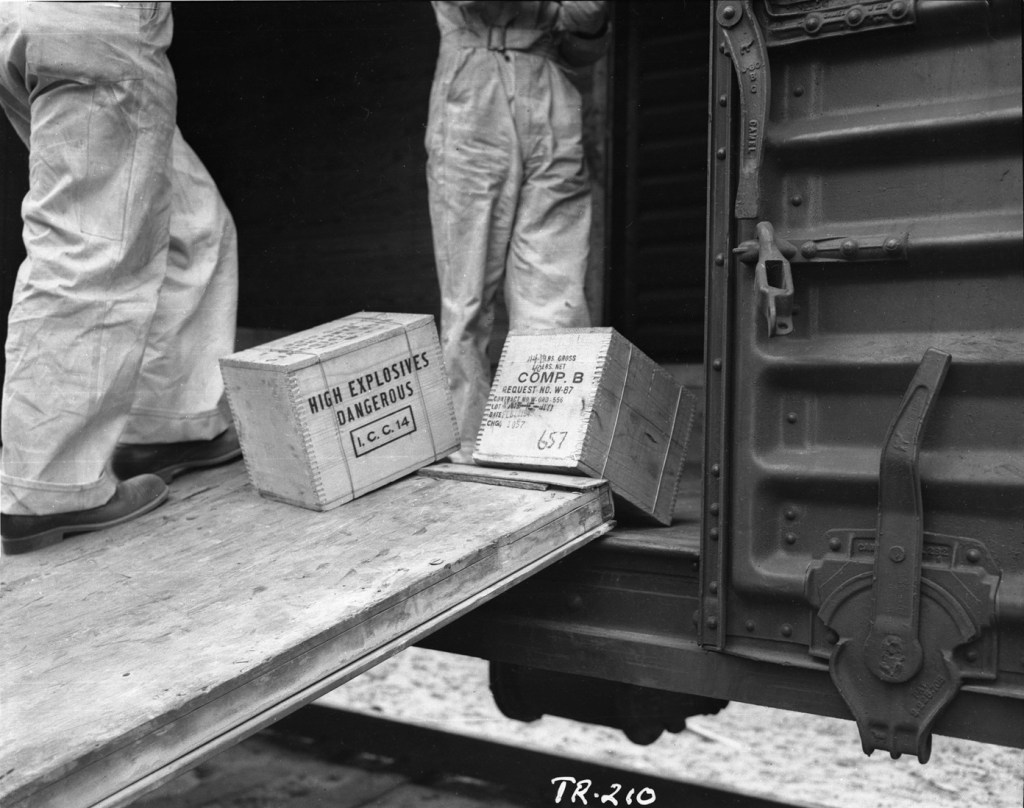
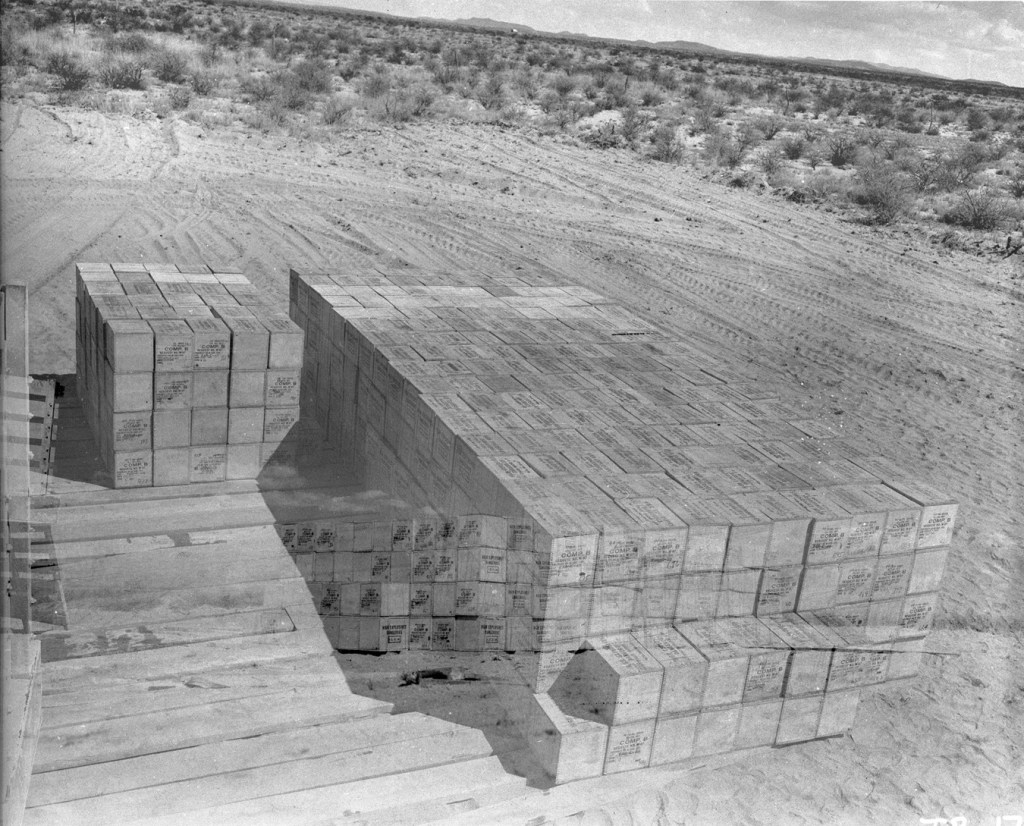
The explosives, packed and shipped in crates, were unloaded at the Pope railroad siding, the same location where Jumbo was offloaded. 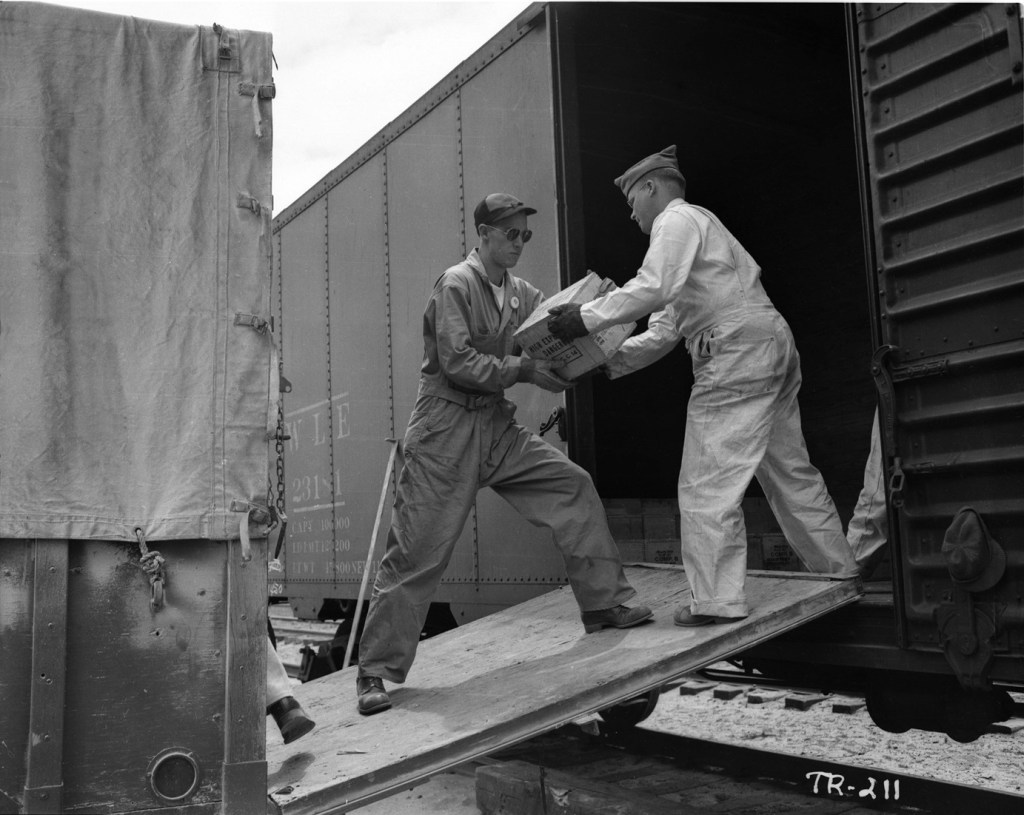

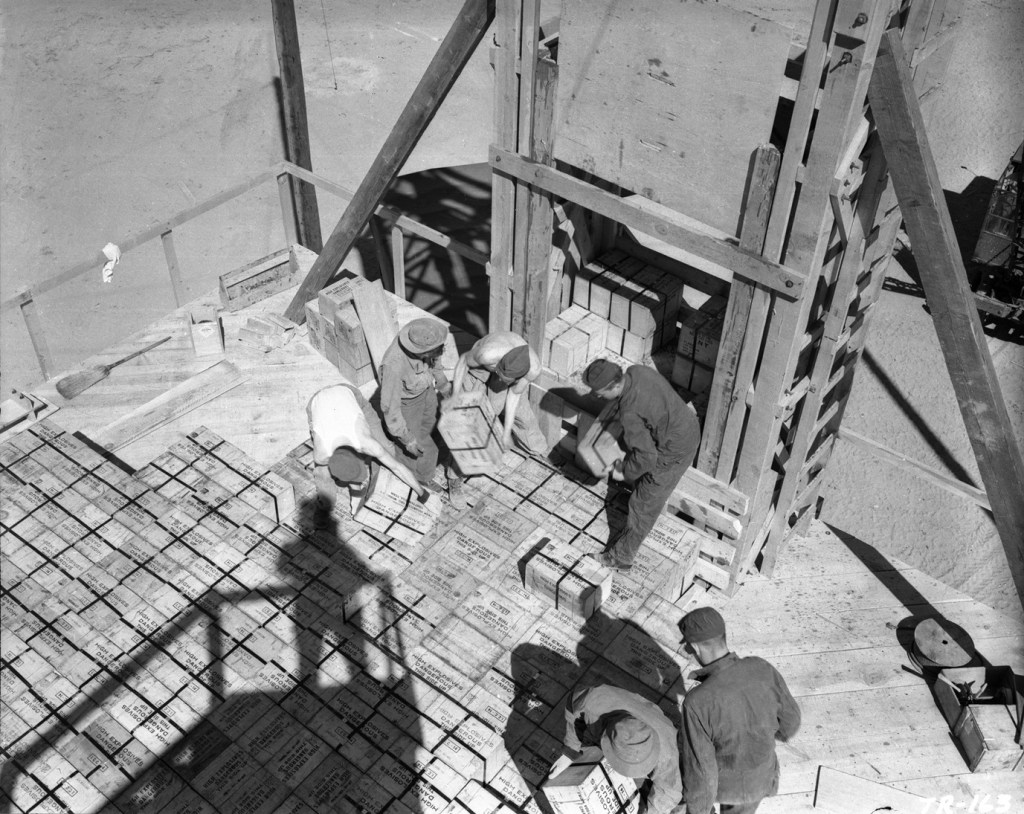
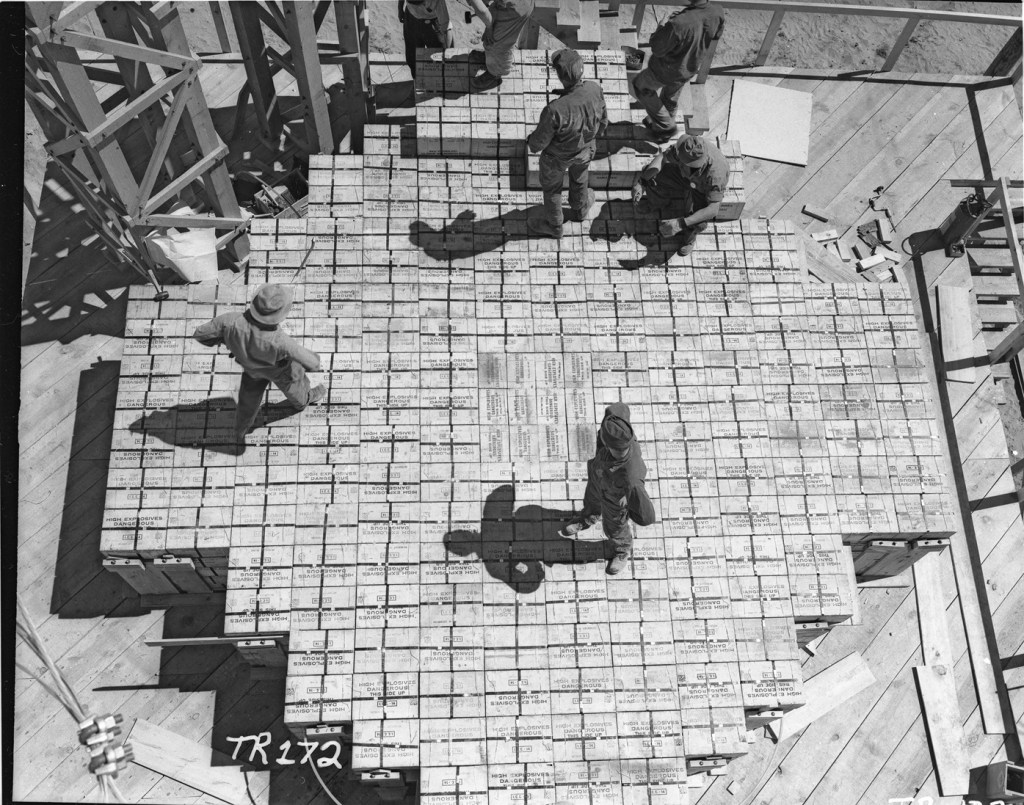
Soldiers stack blocks of high explosives on the 100K test stand. 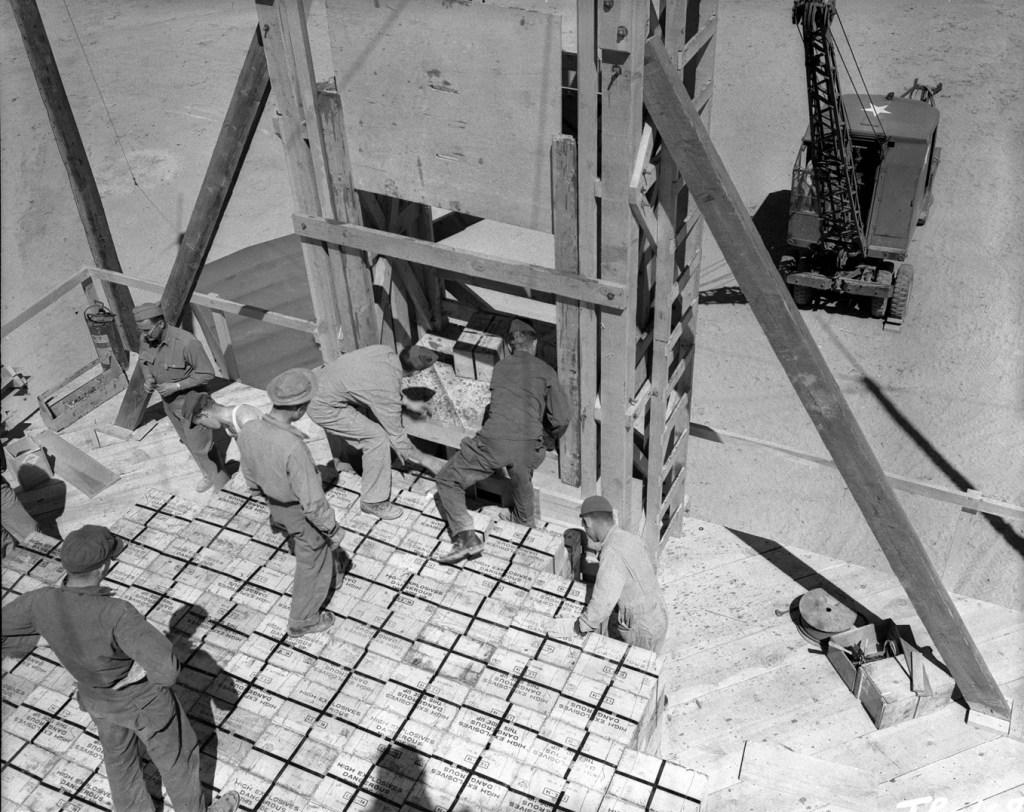

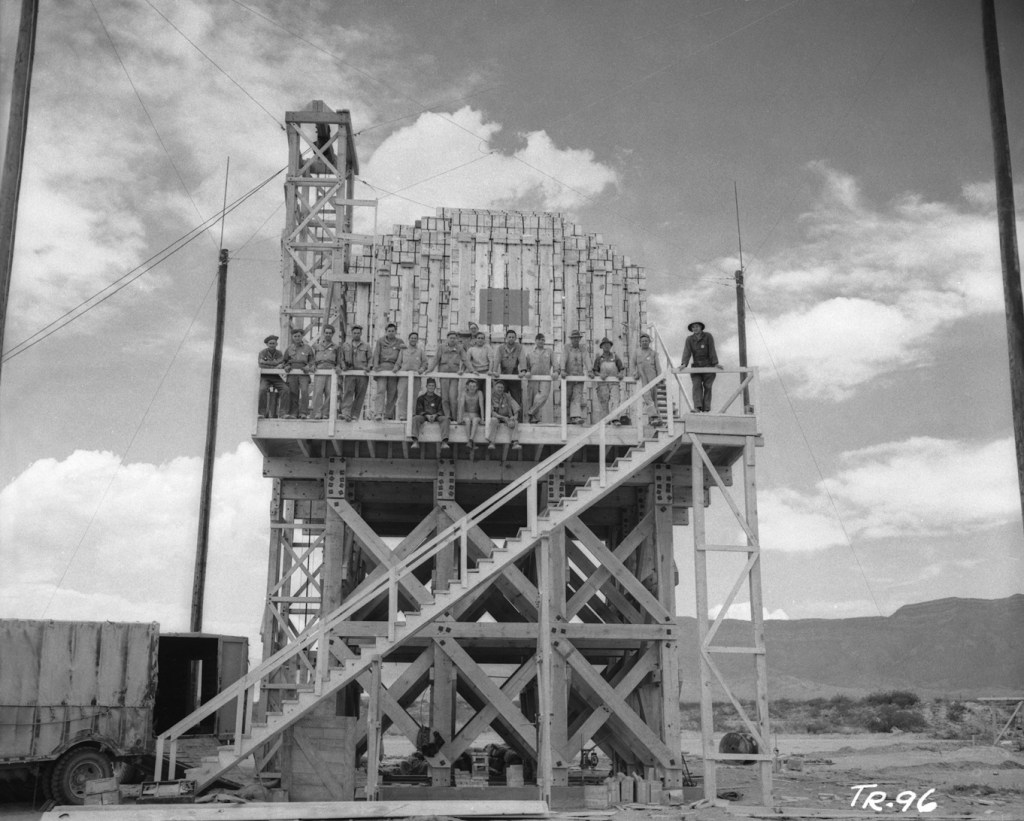
The crew working on the 100K test pose for the camera on the test stand.
On 7 May 1945, soldiers and technicians stacked a little more than 100 tons of high explosives on a 20-foot platform for a calibration and procedures check. The explosives, mostly sourced from Fort Wingate, New Mexico, was comprised of 3,590 boxes of TNT and 774 boxes of Composition B, abbreviated as “Comp B.” The total weight was 89.75 tons of TNT and 14.91 tons of Comp B, a bit more than the rounded off number of 100 tons. A relatively small amount of explosives was set aside for additional calibration testing. The known explosive quantity provided a benchmark for seismographs, blast gauges, and other instruments. A small amount of radioactive material made from a dissolved slug from the Hanford, Washington facility was threaded through the stack in tubing to calibrate other instruments.
Although it was understood that the atomic bomb’s yield could be as high as 20,000 tons, test plans were based on yield limited to 10,000 tons with the most probable yield estimated as 4,000 tons, if it worked at all. Much was learned and refined for what was to be the first field, rather than laboratory, atomic test.
Although the 100-ton test was spectacular, as the flash was allegedly seen 60 miles away, it was soon overshadowed by Trinity’s yield of approximately 24.8 kilotons.
2 thoughts on “The Trinity Test Site”